
The next estimated tax payment deadline is coming up soon
If you make estimated tax payments, the amount you owe may be affected by the law enacted on July 4. It introduces tax breaks that could shift your income tax liability. Estimated tax payments ensure that certain people pay taxes throughout the year. You may have to make them if you receive interest, dividends, self-employment income, capital gains or other income. If you don’t pay enough through withholding and estimated payments during the year, you may be liable for a penalty. Individuals generally must pay 25% of their required annual tax four times a year with Form 1040-ES (an exception may be available if your income isn’t uniform over the year). The next payment is due Sept. 15.
Lower your self-employment tax bill by switching to an S corporation
If you own an unincorporated small business, are you fed up with high federal self-employment (SE) taxes? The maximum 15.3% SE tax includes Social Security tax (up to an annual ceiling of $176,100 in 2025) and Medicare tax. To lower SE taxes, consider converting your business into an S corp and then paying yourself (and any other shareholder-employees) a modest salary. Distribute most or all of the remaining corporate cash flow to the shareholder-employee(s) as federal-employment-tax-free distributions. However, this strategy isn’t right for every business. The salary must be reasonable or the IRS could impose back taxes, interest and penalties. Consult with us before making a switch.
5 ways businesses can assess health care benefits spending

With health care benefits costs widely anticipated to rise, many business owners may be wondering whether to retool their plans for next year. A good first step is assessing your current costs. Here are five ways to ascertain whether you’re spending wisely: 1) Choose and calculate metrics, such as benefits utilization rate and cost per participant. 2) Audit medical claims payments and pharmacy benefits management services. 3) Review your pharmacy benefits contract. 4) Interact with employees to determine which benefits are truly valued. 5) Get input from professional advisors. To that end, contact us for help performing financial analyses and identifying ways to optimize spending.
No tax on car loan interest under the new law? Not exactly

The One Big Beautiful Bill Act adds a new tax break for eligible car loan interest. The deduction has been called “no tax on car loan interest,” but that’s not really accurate. There are several requirements. For 2025-2028, up to $10,000 of car loan interest can potentially be deducted each year. The deduction is phased out starting at $100,000 of modified adjusted gross income or $200,000 for married joint filers. The vehicle’s “final assembly” must occur in the U.S. You must report the vehicle identification number on your tax return. Used vehicles aren’t eligible. The personal-use vehicle must have a gross vehicle weight rating under 14,000 pounds. Contact us with any questions.
A tax guide to choosing the right business entity
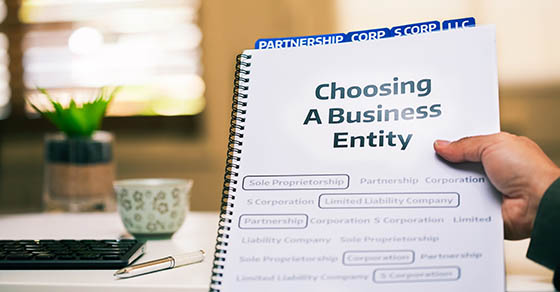
One of the critical decisions entrepreneurs make when starting or restructuring a business is choosing the right entity. The options include sole proprietorships, partnerships, limited liability companies, S corporations and C corporations. The choice affects how the business is taxed, the level of administrative complexity, legal liability and regulatory compliance obligations. There’s no universal answer to which entity is best. The best choice depends on your goals, ownership structure and financial needs. Tax optimization is critical. For example, an LLC electing S corp status may help minimize self-employment taxes. Contact us. We can help you choose the right structure.
Businesses can still choose to address sustainability

For years, many businesses have at least considered sustainability when running their operations. With the passage of the One, Big, Beautiful Bill Act (OBBBA), however, the federal government has disincentivized businesses from taking certain green measures. For example, the OBBBA permanently eliminates the Section 179D Energy Efficient Commercial Buildings Deduction for buildings or systems on which construction begins after June 30, 2026. Where does this leave your business? It’s up to you and your leadership team whether you want to address sustainability. If it’s something you intend to prioritize, we can help you review your operations and identify cost-effective steps to take.
The new law includes a game-changer for business payment reporting
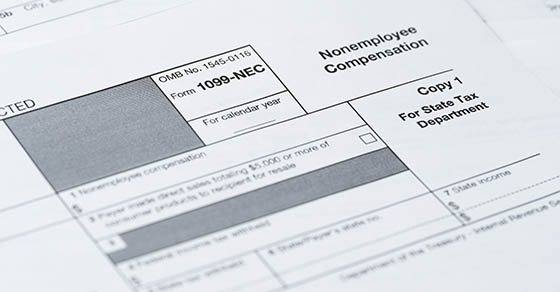
For decades, the IRS has required that businesses file Form 1099-NEC (previously 1099-MISC) for payments made to independent contractors that exceed $600 in a calendar year. This threshold amount has remained unchanged since the 1950s! The One, Big Beautiful Bill Act (OBBBA) contains a major overhaul to this outdated IRS requirement. Beginning with payments made in 2026, the new law raises the threshold for information reporting on certain business payments from $600 to $2,000. Beginning in 2027, the threshold amount will be adjusted for inflation. Contact us with any questions about the new rules or your filing requirements.
Act soon: The OBBBA ends clean energy tax breaks

The One, Big, Beautiful Bill Act eliminates a number of clean energy tax incentives originally introduced or expanded under the Inflation Reduction Act. For example, the clean vehicle tax credit now ends on Sept. 30, 2025 (rather than 2032). The credit provides up to $7,500 for qualifying new electric and fuel cell vehicles, depending on how the battery components and critical minerals are sourced. The maximum manufacturer’s suggested retail price for an eligible vehicle is $55,000 for cars and $80,000 for SUVs, trucks and vans. To qualify, your income must not exceed $150,000 ($300,000 for married couples filing jointly and $225,000 for heads of households). Contact us with any questions.
Is your business ready for digital documents and e-signatures?

In many industries, digital documents and e-signatures are no longer just a convenience; they’re fast becoming the standard. If your business is still relying on paper documents and manual signatures, now may be the time to take a fresh look at what you might be missing. Using digital documents is generally much faster than traditional hard copies, and it’s a strong safeguard against disaster, theft and mishandling. Naturally, before you implement this technology, you should fully understand the legal ramifications, as well as ensure you have up-to-date and effective cybersecurity measures in place. Contact us for help evaluating the costs and potential return on investment.
What you still need to know about the alternative minimum tax after the new law
The alternative minimum tax (AMT) is a separate federal income tax system that bears some resemblance to the regular income tax system. The difference? The individual AMT system taxes certain types of income that are tax-free under the regular system. It also disallows some deductions that are allowed under the regular system. If the AMT exceeds your regular tax bill, you owe the larger AMT amount. Don’t assume you’re exempt from AMT. The One, Big, Beautiful Bill Act increases the odds for taxpayers in certain situations, starting in 2026. For example, some risk factors involve having a high income and exercising incentive stock options. Questions about whether you’re liable? Contact us.