
Can you turn business losses into tax relief?
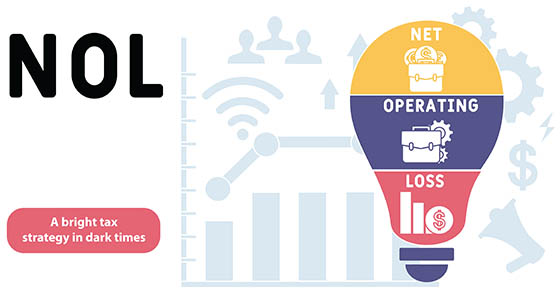
Even well-run companies experience down years. The federal tax code may allow a bright strategy to lighten the impact. Certain losses, within limits, may be used to reduce taxable income in later years. The net operating loss (NOL) deduction addresses the tax inequities between businesses with stable income and those with fluctuating income. It lets the latter average their income and losses over the years and pay tax accordingly. The tax rules regarding business losses are complex, especially when accounting for how NOLs can interact with other potential tax breaks. Please consult with us about how to proceed in your situation.
4 ways business owners can make “the leadership connection”

Today’s business owners need to form an authentic bond with their employees. Here are four ways to make “the leadership connection” with your staff: 1) Listen and share; set up an email address or web portal for employees to share concerns and ask questions. 2) Stage formal get-togethers; hold “town hall” meetings to discuss the company’s financial performance and establish expectations for the future. 3) Make appearances; though meetings are useful, interact with managers and employees in other ways as well. 4) Have fun and celebrate; show positivity, a sense of humor and be enthusiastic about your business’s successes. Ultimately, the leadership connection is about building trust.
Still have tax questions? You’re not alone

If you filed your 2024 tax return, you may still have a few questions: 1) When will you get your refund? Go to the IRS website and click “Get your refund status.” You’ll need your Social Security number, filing status and the exact refund amount. 2) How long should you keep tax records? In general, hold on to tax documents for 3 years after filing. However, keep the actual tax returns indefinitely. Certain situations may require keeping records longer. 3) Can you still claim a missed deduction or credit? Yes! You can file an amended return to claim a refund within 3 years of the date you filed your original return or 2 years from the date you paid the tax, whichever is later.
Cost management is critical for companies today

Many business owners take an informal approach to controlling costs. A better way is through systematic cost management. This means identifying your company’s major spending areas and continuously adjusting how you allocate dollars to each. Examples include: 1) Supply chain; analyze sourcing, production and distribution, factoring in the impact of global tariffs. 2) Operations; undertake periodic reviews to identify bottlenecks, outdated processes and old technology. 3) Customer service; look into helpful tech solutions and focus on optimal channels. 4) Marketing and sales; use the right tech to get the data you need, and review sales compensation and travel expenses. Contact us for help.
Corporate business owners: Is your salary reasonable in the eyes of the IRS?

Are you a corporate business owner? Make sure your compensation passes IRS scrutiny! Determining “reasonable compensation” is a critical issue for owners of C corporations and S corporations. If the IRS believes an owner’s compensation is unreasonably high or low, it may disallow certain deductions or reclassify payments, potentially leading to penalties, back taxes and interest. The IRS wants to see that what you pay yourself is in line with what you’d pay someone else doing the same job. Some factors the IRS examines include duties, experience and comparable salaries for similar positions in the same industry. Contact us for guidance on setting or reviewing your compensation.
The “wash sale” rule: Don’t let losses circle the drain

If you make an ill-fated investment in a taxable account, you may be able to harvest a tax-saving capital loss by selling the losing stock. However, for federal income tax purposes, the “wash sale” rule could disallow your tax loss. A loss from selling stock is disallowed if, within the 61-day period beginning 30 days before the loss sale date and ending 30 days after that date, you buy substantially identical securities. If you have a disallowed wash sale loss, it doesn’t vaporize. Instead, it’s added to the tax basis of the substantially identical securities that triggered the wash sale rule. When you eventually sell, the extra basis reduces your tax gain or increases your tax loss.
An education plan can pay off for your employees — and your business

Your business can set up a Sec. 127 educational assistance plan to give each eligible employee up to $5,250 a year, free from federal income tax and payroll tax. The plan must meet certain requirements. For example, it must be in writing, for the exclusive benefit of employees. The plan can’t discriminate in favor of highly compensated employees or their dependents who are employees. Also, you can’t offer employees the choice between tax-free educational assistance and other taxable compensation, like wages. You can provide the benefit to your own child if he or she is 21 or older, an employee of the business, not your dependent and not a more-than-5% owner. Contact us to learn more.
EBHRAs: A flexible health benefits choice for businesses

Under a Health Reimbursement Arrangement (HRA), your business sets up and wholly funds a plan that reimburses participants for qualified medical expenses of your choosing. But there are several different types of HRAs. For example, an excepted benefit HRA (EBHRA) limits employer contributions so much that participants’ accounts under the plan are considered “excepted benefits.” This means EBHRAs aren’t subject to certain legal mandates. In 2025, employer-sponsors may contribute up to $2,150 to each participant per plan year. You can, however, choose to contribute less. Other rules apply, and EBHRAs are subject to ERISA and parts of HIPAA. Contact us for more information.
How companies can spot dangers by examining concentration

In a business context, “concentration” can refer to various aspects of a company’s operations. Examining different types of concentration may help you spot certain dangers. Take customer concentration, for example. This is the percentage of revenue generated from each customer. Many companies precariously rely on only a few customers to generate most of their revenue. There’s also vendor concentration (the number and types of vendors a business uses), geographic concentration (how the physical location of customers or suppliers affects operations), and investment concentration (how funds are allocated to capital improvements). Contact us for assistance in evaluating any or all of these.
What tax documents can you safely shred? And which ones should you keep?

Once you file your 2024 tax return, you may want to shred or delete tax records. But if the IRS audits your return, you could have to produce documentation. It’s a good idea to keep the actual returns indefinitely. But what about supporting records such as receipts, canceled checks and 1099 forms? In general, the IRS can only assess tax within three years after the return for the year was filed (or three years after the return was due). For example, if you filed your 2022 return by the April deadline in 2023, the IRS has until April 2026 to assess a tax deficiency against you. If you file late, the IRS generally has three years from the date you filed.